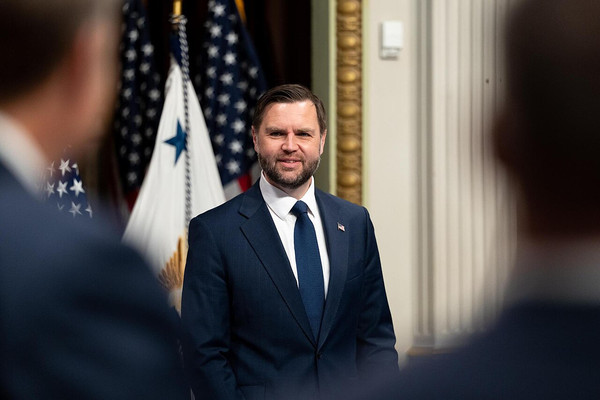
Vice President JD Vance defended key elements of the emerging U.S.-Iran peace framework on Monday, pushing back against claims circulating in Iranian media while emphasizing that any benefits offered to Tehran would be tied to significant concessions and strict oversight requirements.
During an interview with CBS News senior White House and political correspondent Ed O’Keefe, Vance was pressed on reports that Iran could gain access to a massive $300 billion reconstruction fund as part of the agreement being negotiated under President Donald Trump’s administration.
O’Keefe asked directly whether Iranian claims regarding access to the reconstruction money were accurate.
Vance responded that such assistance could become available under certain circumstances, but only if Iran fulfills its obligations under the agreement.
“Well, Ed, that’s the sort of thing they could have access to, funded by the Gulf coast coalition, so long as they honor their end of the obligation,” Vance said.
The vice president cautioned against accepting Iranian messaging at face value, arguing that hardline factions within the country are likely to emphasize potential benefits while minimizing the concessions required to obtain them.
According to Vance, the framework under discussion would require Iran to take significant steps regarding its nuclear program before any reconstruction assistance could move forward.
He said the United States is open to Gulf nations helping fund the rebuilding of Iran, but only if Tehran agrees to end its nuclear program, eliminate its stockpile of enriched material, and submit to a rigorous inspections and enforcement system designed to ensure it never acquires a nuclear weapon.
Vance argued that Iranian media outlets, particularly those aligned with hardline interests, are likely to focus heavily on what Iran receives while devoting far less attention to what it must surrender as part of any final arrangement.
“It’s important for all of us to correct that record,” he said.
The comments reflect the broader debate surrounding the proposed agreement, as both supporters and critics scrutinize the details of what each side may ultimately gain or concede. While the administration has portrayed the negotiations as a pathway toward stability and nuclear restraint, many of the finer points remain unresolved and subject to ongoing discussions.
Later Monday, Vance appeared on CNBC, where anchor Becky Quick questioned him about another major issue tied to the negotiations: the future of commercial shipping through the Strait of Hormuz.
Quick noted that both sides have indicated the strategic waterway would reopen, but she raised questions about whether the arrangement would be permanent or limited in duration. She specifically referenced suggestions from Iran that unrestricted access could last only 60 days.
Vance acknowledged that negotiators are still working through the details.
“Our expectation is that the strait is gonna be opened in a toll-free way for the long term,” he said.
At the same time, he stressed that discussions remain ongoing and that numerous technical matters still need to be resolved before any final agreement is completed.
“There are a lot of very important details to figure out,” Vance said, adding that negotiators will continue working through those issues at the bargaining table.
His remarks underscored both the promise and uncertainty surrounding the negotiations. While the administration is expressing optimism about long-term, toll-free access through one of the world’s most important shipping corridors, final terms remain under discussion, leaving several critical questions unanswered as talks continue.
Vance Defends Iran Agreement Framework as Questions Remain Over Reconstruction Funds and Hormuz Access
- by:
- 06.15.20
- Source:
nightlynewslink.com

- 06.15.20
