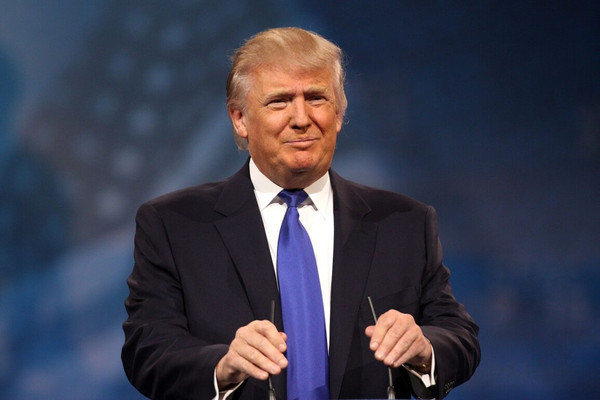
President Donald Trump on Thursday announced a major change in his plans for the nation’s intelligence leadership, naming former Securities and Exchange Commission Chairman Jay Clayton as his choice to serve as director of national intelligence amid growing controversy surrounding acting DNI-designate Bill Pulte.
The move comes after mounting pressure from lawmakers and renewed debate over the future of America’s surveillance authorities. Earlier in the day, both the House and Senate rejected legislation that would have extended the government’s warrantless surveillance powers, with concerns surrounding Pulte’s upcoming role emerging as a major point of contention.
In a post on Truth Social, Trump praised Clayton’s legal credentials and extensive public service record while urging the Senate to move quickly on his confirmation.
“I am pleased to announce the Nomination of very Highly Respected Jay Clayton, former Chairman of the Securities and Exchange Commission, the former Head of Sullivan & Cromwell, one of the most prominent and successful Law Firms anywhere in the World, and the current United States Attorney for the Southern District of New York, to be the next Director of National Intelligence and, importantly, to serve in my Cabinet,” Trump wrote.
The president went on to describe Clayton as one of the most respected figures in the legal profession and called on senators to approve the nomination as soon as possible.
Clayton’s selection places a veteran attorney and prosecutor at the center of one of Washington’s most heated political battles. He currently serves as U.S. Attorney for the Southern District of New York, a prestigious prosecutorial office that has handled numerous high-profile cases. Before that, he led the SEC during Trump’s first administration and previously worked at the prominent law firm Sullivan & Cromwell.
For months, Clayton had been discussed as a possible candidate for several senior administration positions, including attorney general. His nomination to oversee the intelligence community now represents one of the most significant personnel decisions of Trump’s second term.
The announcement also reflects the growing political fallout from Trump’s decision to elevate Pulte to a leadership role within the intelligence apparatus. Critics from both parties have questioned the move, and concerns intensified after lawmakers refused to extend Section 702 surveillance authorities.
Much of the opposition centers on Pulte’s actions while leading the Federal Housing Finance Agency, where he referred several Trump adversaries for criminal prosecution over alleged mortgage fraud. Those actions fueled concerns among lawmakers already skeptical of expanding surveillance powers.
Despite Trump’s nomination of Clayton, Senate Democrats indicated they remain unconvinced that the administration has done enough to address their concerns.
Senate Minority Leader Chuck Schumer was blunt in his assessment, saying Pulte “has got to go” and adding that he fully supports removing him from the position.
Meanwhile, Mark Warner, the top Democrat on the Senate Intelligence Committee, argued that the administration waited too long to announce a replacement candidate. Warner pointed out that House lawmakers had already departed Washington after rejecting legislation that would have temporarily extended Section 702 through July 2.
According to Warner, the most realistic path toward securing an extension would involve either DNI Tulsi Gabbard or her deputy, Aaron Lukas, stepping in to serve as acting DNI instead.
The dispute underscores how leadership of the intelligence community has become deeply intertwined with the broader fight over surveillance powers. While supporters argue those authorities remain vital to national security, opponents continue to demand greater accountability and oversight, reflecting a growing unease in Washington about the scope of government surveillance and the concentration of power within the nation’s intelligence agencies.
Trump Turns to Jay Clayton for Intelligence Post as Fight Over Surveillance Powers Intensifies
- by:
- 06.11.20
- Source:
nightlynewslink.com

- 06.11.20
