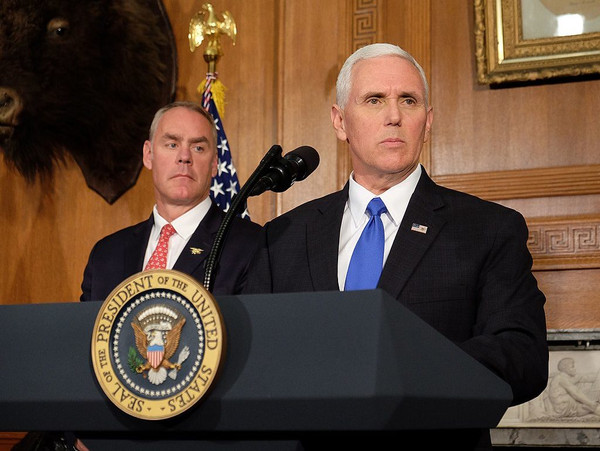
Former Vice President Mike Pence delivered a sharp critique of the Trump administration’s emerging agreement with Iran on Wednesday, warning that the proposed memorandum of understanding bears troubling similarities to the kind of “appeasement” policies that the first Trump administration spent years opposing.
Appearing on Fox News with anchor John Roberts, Pence expressed deep reservations about both the contents of the agreement and what he believes has been left out of it, arguing that the deal fails to secure key concessions from Tehran while offering substantial economic benefits in return.
“I do have concerns about the memorandum of understanding now that we see it,” Pence said. “The terms about what’s in it — and also what’s not in it — suggest to me that it does smack of the kind of appeasement that our administration rejected in the Obama-Iran nuclear deal.”
Pence pointed first to what he described as major omissions in the framework. According to the former vice president, the agreement contains no explicit commitment from Iran to verifiably dismantle its nuclear program, no pledge to abandon its ballistic missile program, and no requirement that Tehran stop supporting terrorist proxy groups throughout the region.
“That’s what’s not in it,” Pence said, arguing that those issues should remain central to any lasting agreement.
He also raised concerns about the concessions that could flow to Iran under the arrangement. Pence noted that the agreement would end a blockade that he said had placed significant pressure on the regime and helped bring it to the negotiating table.
In addition, Pence said his understanding is that economic sanctions on Iranian oil sales could be lifted immediately if the deal is signed, potentially generating billions of dollars in revenue for the government in Tehran.
“What do you think they’ll do with that money?” Pence asked, suggesting that without stronger commitments from Iran, there is no guarantee how those resources would be used.
The former vice president also highlighted concerns about approximately $100 billion in frozen Iranian assets. He pointed to language in the memorandum suggesting that some of those funds could be released if negotiations show progress, even before a final agreement is completed.
Pence further questioned a reported commitment by the United States to help arrange access to a separate $300 billion regional fund.
Despite the administration’s optimism, Pence made clear that his skepticism stems from years of dealing with Iranian officials during his time in Congress and the White House.
“There’s the old saying that goes, ‘Trust but verify,’” Pence said. “But when it comes to the mullahs in Tehran, we need to verify, verify, and then trust.”
Roberts then turned to another aspect of the agreement involving the Strait of Hormuz. The veteran anchor noted reports that the waterway would remain open to free shipping for 60 days, after which Iran, Oman, and other Gulf nations could discuss a future administrative arrangement.
Pence responded that what matters most is restoring the freedom of navigation that existed before the conflict erupted.
“What we need to demand is the restoration of the freedom of navigation that existed in the Strait of Hormuz before shots were fired here,” he said.
While Pence said he was encouraged that President Trump had described signing the agreement as only “most likely,” he argued that negotiations should continue until stronger guarantees are secured.
“If I was at his side, as I was for four and a half years, I would urge the president to take a step back,” Pence said, calling for additional pressure and tougher demands regarding Iran’s nuclear ambitions, missile programs, and support for terrorist groups.
At the same time, Pence’s comments reflected the high stakes involved in the negotiations. His message was that any lasting peace must be backed by verification and enforceable commitments, rather than assumptions or promises alone. As debate continues over the agreement, the central question remains whether diplomacy can secure those guarantees without the need for a broader and potentially more dangerous conflict.
Pence Warns Iran Deal Resembles Obama-Era Appeasement, Urges Tougher Demands Before Signing
- by:
- 06.17.20
- Source:
nightlynewslink.com

- 06.17.20
