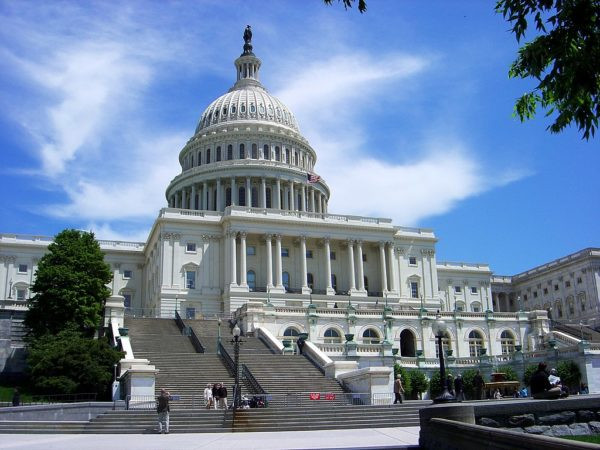
The House of Representatives on Thursday approved a Democratic-backed war powers resolution aimed at limiting President Donald Trump’s military actions in Iran, marking another effort by lawmakers to reassert Congress’s role over decisions involving armed conflict.
The measure passed by a narrow 214-208 vote, with every Democrat supporting the resolution alongside four Republicans. The legislation was sponsored by Rep. Pramila Jayapal (D-Wash.), who argued that Congress must reclaim its constitutional authority over matters of war.
The vote comes as fighting between the United States and Iran continues and the number of American military casualties rises. Since the United States and Israel launched joint strikes against Iran in February, 18 U.S. service members have been killed during the conflict.
Speaking on the House floor ahead of Thursday’s vote, Jayapal framed the resolution as an effort to bring an end to the ongoing military engagement.
“This is a vote of conscience. This is a vote that requires us to find the strength to do what is right for the American people, and to send the clearest, even stronger message to this president of the United States that the United States Congress, the House of Representatives, is reasserting our authority over war. This war must end,” Jayapal said.
The House action follows similar efforts by lawmakers in both chambers of Congress last month, reflecting growing frustration among some members over how the Trump administration has handled the conflict with Iran.
In June, Reps. Tom Barrett (R-Mich.), Warren Davidson (R-Ohio), Thomas Massie (R-Ky.), and Brian Fitzpatrick (R-Pa.) joined Democrats in supporting a war powers resolution in the House. During the same month, Republican Sens. Rand Paul (Ky.), Susan Collins (Maine), Lisa Murkowski (Alaska), and Bill Cassidy (La.) also backed a similar measure in the Senate.
Meanwhile, Senate Minority Leader Chuck Schumer (D-N.Y.) announced Wednesday that Senate Democrats would force consideration of a war powers resolution on the Senate floor Thursday, ensuring lawmakers in the upper chamber would also weigh in on the issue.
“Every senator will have to make a choice,” Schumer said. “You cannot claim to support the troops while leaving them trapped in war with no mission and no end. You cannot call it a victory while the battlefield keeps expanding, and you cannot hide the wounded and call it peace.”
The congressional debate comes as President Trump continues to oversee the U.S. military response to the conflict. On Wednesday, the president participated in a dignified transfer honoring U.S. service members who were killed in Jordan and Iraq during the war with Iran.
At the same time, Trump issued a warning to Tehran over attacks targeting commercial vessels traveling through the Strait of Hormuz, one of the world’s most important oil shipping corridors. The United States has said those attacks violate the ceasefire agreement reached by both sides last month.
In a Truth Social post Wednesday, Trump outlined how the United States would respond to any future attacks on ships transiting the strategic waterway.
“From this point forward, any time the Islamic Republic of Iran shoots at a ship in the Strait of Hormuz, whether it be by Missile, Rocket, Drone, or any other device or weapon, the United States will bomb and destroy ONE BRIDGE OR POWER PLANT, including those located next to, or in, the Capital City of Tehran,” Trump wrote.
The House vote adds another chapter to the ongoing debate in Washington over congressional authority, military engagement, and the future direction of U.S. involvement in the conflict with Iran.
House Approves Democratic-Led War Powers Resolution Seeking to Limit Trump’s Military Action in Iran
- by:
- 07.23.20
- Source:
nightlynewslink.com

- 07.23.20
