



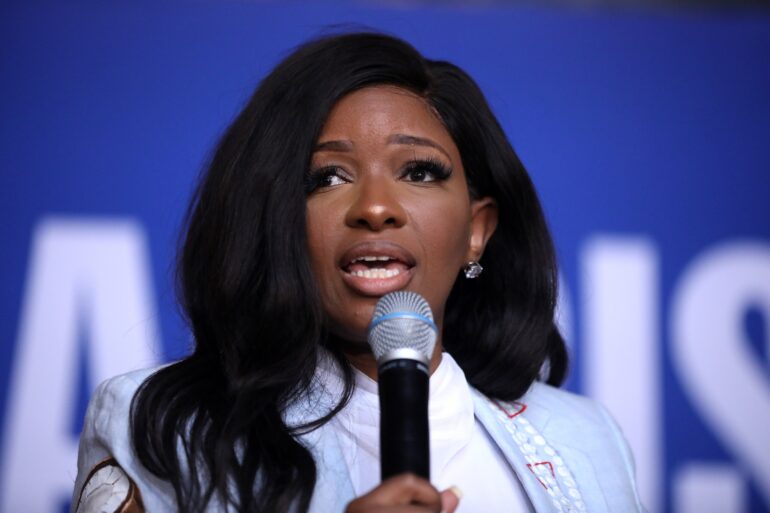
A new poll shows Rep. Jasmine Crockett is now reportedly holding an early lead in the Texas Democratic Senate primary — despite entering the race only days before the survey was conducted. But beneath that headline number lies a fractured Democratic electorate and a strategic dilemma that could complicate the party’s hopes of flipping a statewide seat in deep-red Texas.
The Barbara Jordan Public Policy Research and Survey Center at Texas Southern University polled 1,600 likely Democratic primary voters between Dec. 9 and Dec. 11. The results, released Friday, show Crockett leading State Rep. James Talarico 51% to 43%, with a margin of error of 2.45%.
Crockett celebrated the numbers as proof that she is best positioned to win statewide. “The Texas Southern poll illustrates that voters know what I know: that I’m in the best position to mobilize voters who’ve been overlooked, ignored, and excluded,” she said, arguing that boosting turnout among infrequent Democratic voters is “the only way” her party can prevail in Texas.
The demographic breakdown highlights why the race is already so contentious. Crockett dominates among women (57%–36%), voters 55 and older (59%–34%), and Black voters (89%–8%). Talarico, meanwhile, leads among white voters (53%–40%), men (52%–42%), and Latino voters (51%–41%), and posts his strongest margin among voters under 34, where he leads 63%–34%.
Talarico’s campaign responded by emphasizing that many voters still do not know him. While only 6% of likely primary voters say they do not know enough about Crockett to form an opinion, that number jumps to 21% for Talarico — and nearly half of all Black voters say they don’t know him. His campaign argues that as voters hear more about his message of “taking on billionaire mega-donors,” his support will grow.
Rice University political scientist Mark Jones, a co-author of the poll, warned that Talarico’s lack of familiarity among Black voters — Crockett’s strongest demographic — may sharply limit his room for growth.
The poll also asked Democrats how each candidate might help end their party’s three-decade losing streak in statewide Texas races. Respondents overwhelmingly said Crockett would be better at energizing the Democratic base (53%–34%). However, those same voters said Talarico would be better at peeling off moderate Republicans and independents (58%–29%).
Jones noted the contradiction: “These strategies are mutually exclusive.” Energizing progressives risks alienating swing voters; appealing to crossover Republicans risks depressing turnout among Democrats who rarely vote.
The tension highlights a major problem for Texas Democrats: they remain deeply split on whether the party should embrace a progressive mobilization strategy or attempt a centrist crossover approach in a state where Republicans have dominated for decades.
Both Crockett and Talarico now have 81 days to define themselves before the March 3 primary. Early polling gives Crockett an advantage, but Texas Democrats — still searching for a winning formula after 30 years of failure — face an uncomfortable truth: their leading candidates represent two fundamentally incompatible paths, and choosing one may doom the other.
[READ MORE: GOP Quietly Boosted Jasmine Crockett’s Senate Bid, Seeing Her as Weakest Democrat to Challenge Cornyn]
About Post Author

