The U.S. military struck and disabled a commercial ship in the Gulf of Oman after its crew ignored repeated warnings and tried to break the American naval blockade of Iran, U.S. Central Command announced Friday.
According to CENTCOM, the Palau-flagged bulk carrier M/V Pacific Archer tried to run the blockade on Thursday, Nov. 26, after leaving the Iranian port of Bandar Abbas.
"A U.S. military aircraft launched precision munitions that struck the stern of Palau-flagged M/V Pacific Archer," CENTCOM said. "The ship's propulsion was ultimately disabled and the civilian crew was unharmed."
The command said the crew pressed ahead "despite multiple warnings." CENTCOM released a short, unclassified video, about eight seconds long, showing the munition hitting the vessel.
Ship-tracking data indicated the Pacific Archer was bound for Singapore, according to reports.
CENTCOM said it continues to strictly enforce the blockade and urged mariners operating in the Gulf of Oman and near the Strait of Hormuz to heed U.S. warnings. Since the blockade resumed, American forces have redirected 158 compliant commercial vessels and disabled six that refused to comply.
The strike is the latest in a string of enforcement actions. Earlier this month, on Nov. 7, U.S. forces disabled another merchant vessel, the Huda, in the Gulf of Oman after its crew ignored warnings. In October, a U.S. fighter jet struck the stern of the Panama-flagged cargo ship Ocean Molica with a precision munition, knocking out its propulsion without harming the crew.
The U.S. first imposed the blockade in April, after Iran effectively closed the Strait of Hormuz following the start of the war on Feb. 28. The blockade was later lifted and then resumed on July 14, and it now covers vessels traveling to or from Iranian ports.
"U.S. forces in the Middle East remain committed to full enforcement of the blockade of vessels entering or leaving Iran," CENTCOM commander Adm. Brad Cooper said earlier this year. "Our highly trained men and women in uniform are doing incredible work."
Central Command has estimated that the blockade has kept Iran from exporting more than $25 billion worth of crude oil.
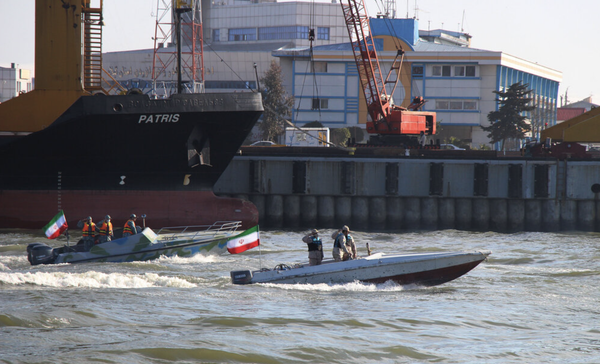
The latest strike comes as Tehran signals it may test American resolve. More than a dozen Iranian tankers are reportedly gathering at Kharg Island, Iran's main oil export terminal, and Iranian officials are weighing whether to send a convoy to challenge the blockade.
Iran's Islamic Revolutionary Guard Corps has tried to enforce its own restrictions on shipping in the Strait of Hormuz, a vital route for global oil supplies.
The war has cost American taxpayers $48.3 billion so far. With Iranian tankers massing and U.S. forces showing they are willing to use force to stop blockade runners, the standoff in the Gulf shows no sign of easing.
US Forces Strike Ship That Tried to Run Iran Blockade, Leave Vessel Dead in the Water
- by:
- 11.28.20
- Source:
nightlynewslink.com

- 11.28.20
