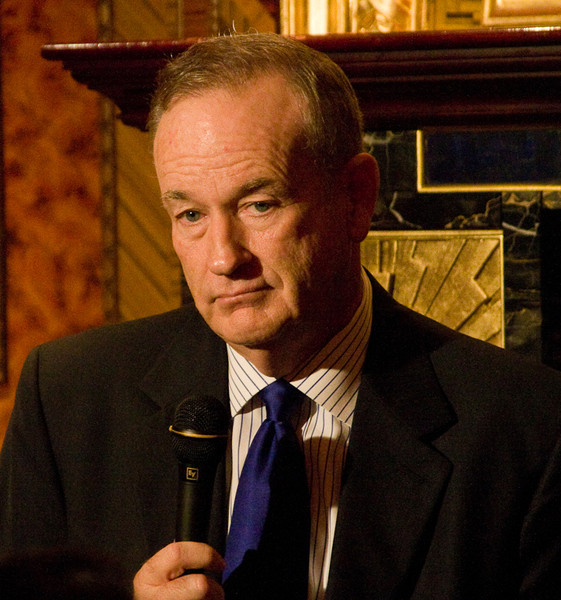
Veteran broadcaster Bill O’Reilly isn’t mincing words about the scandal surrounding former Nvidia CEO Jensen Huang. He says the tech titan belongs behind bars.
On Wednesday’s edition of “No Spin News,” O’Reilly said he doubted Congress would get to the bottom of Huang’s relationship with a woman U.S. officials suspect of spying for China.
“Now, I’m glad that Congress is trying to get information, but I am not optimistic because you had this guy Jensen Huang, having an affair with a Chinese spy, allegedly,” O’Reilly said. “The affair was real. He’s admitted the affair.”
O’Reilly said Huang “should be in cuffs” and that “he should be in the federal pen,” adding: “Because this is sabotage.”
It is not the first time O’Reilly has called for consequences. In an interview with 77 WABC Radio last week, he said Huang “should be prosecuted.” He compared the case to Julius and Ethel Rosenberg, the Americans executed for spying for the Soviet Union, and called Nvidia “a company helping our chief adversary develop technology that can wipe out the world.” “This is national security!” he said.
Huang, 63, resigned as Nvidia’s CEO effective immediately on Thursday, Nov. 12. Days earlier, in a Nov. 8 note to employees, he had admitted to marital infidelity. The woman at the center of the scandal, Alice Huang, is no relation. She is a former executive at Megaspeed, a Singapore-based data center company that bought about $2 billion worth of Nvidia chips. U.S. officials reportedly concluded she passed information to Beijing. China has denied that she is a spy.
The New York Times also reported that Huang had a separate extramarital relationship with Kimberly Powell, an executive who reported to him.
President Trump has said the FBI is investigating Huang’s romantic and business ties to Alice Huang. This week, though, Trump also said Huang has “learned a big lesson” and that he would “not mind” seeing him return to Nvidia. Elon Musk and other tech leaders have backed that push.
On Capitol Hill, lawmakers in both parties want answers. Under threat of a subpoena, Huang has agreed to answer questions from House and Senate lawmakers. House Foreign Affairs Committee Chairman Brian Mast, R-Fla., said lawmakers want to look at Nvidia’s “role in allowing dangerous [People’s Republic of China] actors to access our most advanced chips, as well as the role of a potential Chinese intelligence asset in this scandal.”
The incoming Democratic Congress is preparing its own investigation, including questions about what the administration knew. Commerce Secretary Howard Lutnick’s knowledge of the matter is also expected to face scrutiny.
Huang could theoretically face prison time if investigators find evidence that he knowingly helped break U.S. export-control laws.
The scandal has rocked one of the world’s most valuable companies. For O’Reilly, the question isn’t Huang’s personal life. It’s whether a man in charge of some of America’s most sensitive technology left the door open to its chief rival.
Bill O’Reilly Says Ex-Nvidia CEO Jensen Huang ‘Should Be in Cuffs’: ‘This Is Sabotage’
- by:
- 11.19.20
- Source:
nightlynewslink.com

- 11.19.20
